
Repair or Replace Your Heating or Cooling System
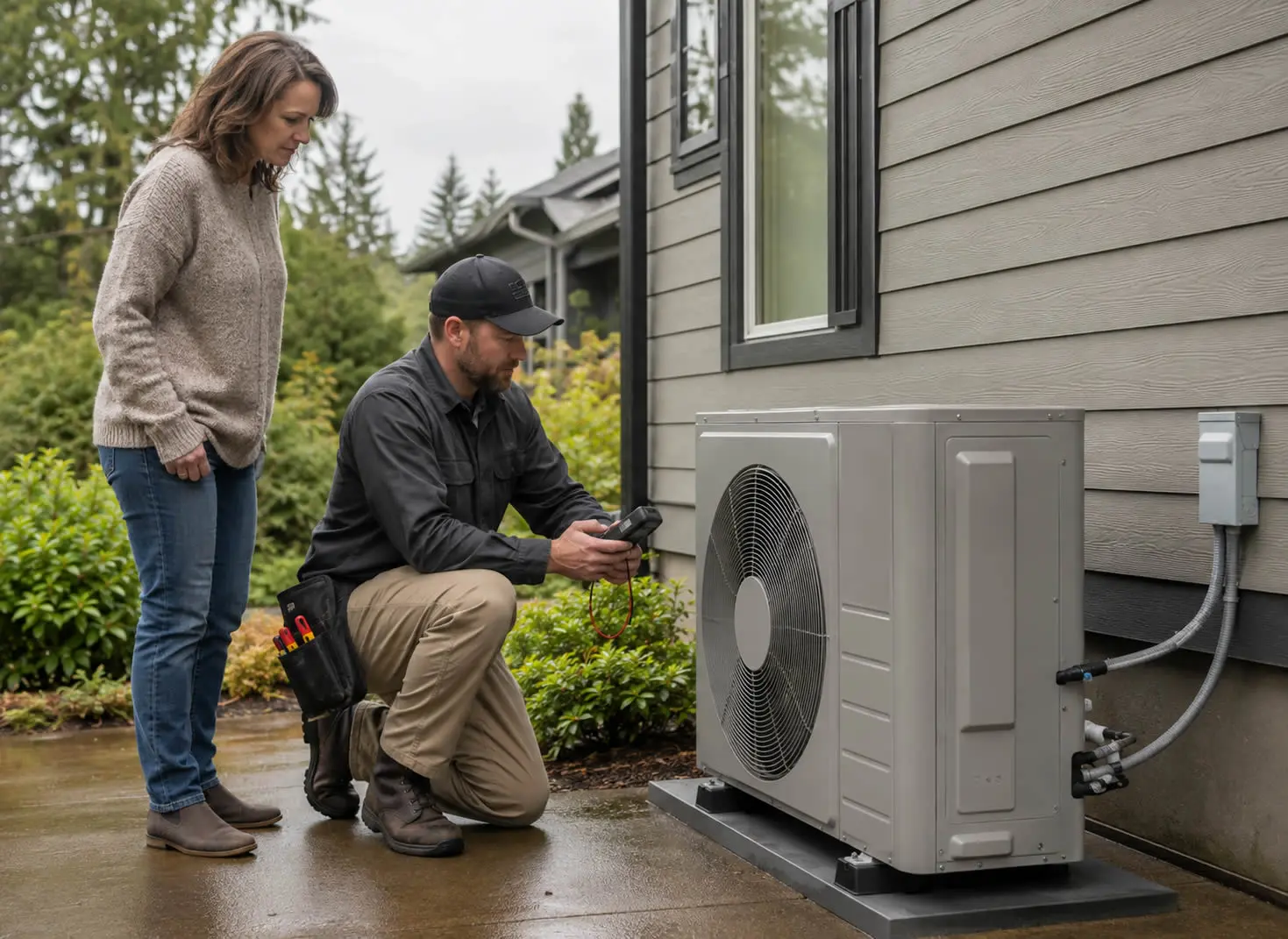
Heat Pump Repair or Replacement in Olympia? 7 Signs It Is Time to Decide
When a heat pump starts making unusual noises, running longer than normal, or struggling to keep your home comfortable, one important question quickly comes up: Should you repair the system or replace it?
For homeowners in Olympia and the South Sound, this can be a difficult decision. A repair usually costs less today, but repeatedly repairing an inefficient or unreliable heat pump can become more expensive over time. On the other hand, replacing a system too early may mean spending money that was not yet necessary.
The right answer depends on the age of your heat pump, the type of repair it needs, its overall condition, and how well it is heating and cooling your home.
Here are seven signs that can help you make a more informed decision.
1. Your Heat Pump Is More Than 10 Years Old
Age alone does not mean a heat pump must be replaced. A properly maintained system may continue operating reliably for years. However, age becomes important when the system also needs a major repair.
ENERGY STAR recommends having heating and cooling equipment evaluated when it is more than 10 years old, especially when it needs frequent repairs or no longer keeps the home comfortable.
If your heat pump is relatively young and has otherwise been dependable, repairing an isolated problem may make sense. If it is more than 10 years old and needs an expensive compressor, coil, motor, or refrigerant-related repair, it is worth comparing the repair cost with the cost and benefits of replacement.
A professional evaluation should consider the entire system, not simply its manufacturing date.
2. The System Needs Repairs More Frequently
One repair does not necessarily mean a heat pump is failing. Electrical components, thermostats, drain lines, sensors, and other parts can occasionally require service.
The concern begins when new problems appear every few months or the same problem keeps returning.
Repeated breakdowns may indicate that several components are reaching the end of their useful lives. Even if each individual repair seems manageable, the combined cost and inconvenience can make replacement the better long-term choice.
Keep a simple record of:
- Repair dates
- Parts that were replaced
- Amount spent on each repair
- Changes in system performance
- Unusual noises or operating behavior
This information helps an HVAC technician identify patterns and gives you a clearer picture of how much the system is actually costing you.
3. Your Energy Bills Are Increasing
An unusually high utility bill does not automatically mean your heat pump needs replacement. Colder weather, higher utility rates, thermostat changes, air leaks, and additional household use can all affect energy consumption.
However, if your electrical usage continues increasing while your habits remain the same, your heat pump may be losing efficiency.
Possible causes include:
- Restricted airflow
- Dirty indoor or outdoor coils
- Duct leakage
- Improper refrigerant charge
- A failing motor or compressor
- Excessive use of auxiliary electric heat
- Incorrect thermostat settings
Auxiliary heat is designed to help during certain operating conditions. If it runs frequently during relatively mild South Sound weather, the system should be inspected.
Sometimes maintenance or a targeted repair can restore efficiency. In other cases, the cost of operating an older system may support upgrading to a newer, more efficient heat pump.
4. Some Rooms Are Too Hot or Too Cold
Uneven temperatures are often blamed on the heat pump, but the equipment is not always the source of the problem.
Poor airflow, damaged ductwork, closed registers, inadequate insulation, air leakage, or an improperly sized system can also create uncomfortable rooms.
Watch for changes such as:
- Rooms that previously stayed comfortable now feeling too warm or cold
- Weak airflow from several vents
- The thermostat reaching its setting very slowly
- The system running continuously without improving comfort
- Large temperature differences between floors
A proper diagnostic appointment should examine the heat pump, airflow, thermostat, ductwork, and overall condition of the home. Replacing equipment without identifying the real cause may leave the original comfort problem unresolved.
5. The Heat Pump Is Short Cycling or Running Constantly
Short cycling occurs when a heat pump turns on and off repeatedly without completing a normal heating or cooling cycle. This can increase component wear and prevent the system from controlling temperature properly.
Possible causes include a thermostat problem, restricted airflow, an electrical issue, incorrect equipment sizing, or a system fault.
Constant operation requires a little more context. Modern variable-speed heat pumps may intentionally run for longer periods at lower output. This can provide quieter operation, steadier temperatures, and better efficiency.
Long operation becomes concerning when:
- The temperature inside the home does not improve
- Airflow is weak
- Energy usage rises sharply
- The system runs loudly at full output
- Auxiliary heat operates excessively
- Ice does not clear during a normal defrost cycle
A technician can determine whether the longer runtime is normal system operation or evidence of a performance problem.
6. You Hear New Noises or Notice Ice, Odors, or Breaker Problems
New sounds and electrical problems should not be ignored.
Grinding, metal-on-metal sounds, loud buzzing, repeated clicking, or unusually strong vibration may indicate a mechanical or electrical issue. A burning odor or a breaker that repeatedly trips requires prompt professional attention.
If the heat pump trips a breaker, you may reset it once. If it trips again, leave the system off and call an HVAC professional. Repeatedly resetting the breaker could allow a serious problem to continue.
It is also important to understand normal heat pump behavior. During cold weather, the outdoor unit may briefly enter a defrost cycle. You might see water or what appears to be steam rising from the unit. This can be completely normal.
A solid buildup of ice that does not clear is different. Do not chip ice from the coil with a tool because the coil can be damaged. Turn the system off if necessary and request professional service.
7. A Major Repair Is Needed and Other Parts Are Already Worn
A single failed component does not tell the whole story. Before authorizing a major repair, ask about the condition of the rest of the equipment.
For example, replacing one expensive component may not be the best investment if the system also has a deteriorating coil, worn blower motor, recurring refrigerant leak, or significant corrosion.
Ask your technician these questions:
- What exactly failed?
- Why did the part fail?
- Is this an isolated problem or part of a larger pattern?
- What other components show signs of wear?
- Is the repair covered by a parts or labor warranty?
- How much reliable service life might remain?
- Are replacement parts readily available?
- Would a new system improve comfort or operating efficiency?
An honest HVAC contractor should explain the problem, show you the available options, and allow you to make the final decision.
When Repairing the Heat Pump May Make Sense
Repair may be the better choice when:
- The system is still relatively young
- This is its first significant problem
- The repair is straightforward and reasonably priced
- The equipment has been properly maintained
- Replacement parts are readily available
- The heat pump was comfortable and efficient before the problem occurred
- The rest of the system is in good condition
A dependable system should not be replaced simply because it needs one service call.
When Replacement Deserves Serious Consideration
It may be time to consider replacement when:
- The system is more than 10 years old and needs a major repair
- Breakdowns have become frequent
- Utility usage continues increasing
- Replacement parts are difficult or expensive to obtain
- The system cannot maintain comfortable temperatures
- Multiple major components are showing wear
- The equipment was improperly sized from the beginning
- You want improved efficiency, quieter operation, or better comfort control
Eligible homeowners may also be able to reduce the cost of a new system through available heat pump rebates or HVAC financing options. Eligibility, equipment requirements, and incentive amounts should always be confirmed before installation.
What You Can Check Before Calling for Service
A few safe checks may help identify a simple problem:
- Confirm that the thermostat is set to the correct mode and temperature.
- Replace a visibly dirty air filter with the correct size and type.
- Make sure supply and return vents are open and unobstructed.
- Remove leaves, weeds, and loose debris from around the outdoor unit while maintaining the manufacturer’s required clearance.
- Check whether the electrical breaker has tripped.
- Write down any thermostat error codes or unusual sounds.
Do not remove equipment panels, handle wiring, add refrigerant, or attempt to repair internal components yourself.
Get an Honest Heat Pump Evaluation in the South Sound
The best repair-or-replace decision begins with an accurate diagnosis.
Perfect Temp, Inc. is a family-owned HVAC company serving Olympia, Tumwater, Lacey, Rochester, Chehalis, Centralia, and surrounding South Sound communities. Since 2000, the company has focused on explaining HVAC problems clearly and helping customers choose solutions that fit their homes, comfort needs, and budgets.
If your heat pump is running poorly, making unusual noises, or causing higher energy bills, schedule a professional evaluation before a minor issue becomes a complete breakdown.
Call Perfect Temp at (360) 890-4312 or request HVAC service online.
For urgent heating or cooling breakdowns, 24/7 emergency service is available
 Find Your Perfect Temp Today! Whether you’re freezing in the winter or sweating through the summer, our experts are here to restore comfort to your home or business
